



- Home
- Baby [an error occurred while processing this directive]
- Toddler [an error occurred while processing this directive]
- Preschooler [an error occurred while processing this directive]
- Kindergartner [an error occurred while processing this directive]
- First Grader [an error occurred while processing this directive]
- Second & Third Grader [an error occurred while processing this directive]
- Articles
[an error occurred while processing this directive]
- Nursery Rhymes
- Sharing Poetry
- Author Focus: Jan Brett and Jane Yolen
- What Is Phonics, Anyway?
- What Not to Say to Emerging Readers
- Children's Choice
- Table Talk
- Tips for Summer Reading
- "Clicking" with Children: Computers and Young Children
- Book Clubs
- Car Talk
- Growing Up with a Learning Disability: A Child's Story
- Raising a Child with a Learning Disability: A Mother's Story
- Ways to Introduce Your Kids to Foreign Languages
- Learning Two Languages: Questions Parents Ask
- Reading to Two: A Double Challenge
- Qualities of a Good Classroom
- How to Create a Literate Home
- A Primer on Dyslexia
- Quick Tips [an error occurred while processing this directive]
- Sitemap
- About This Site
Home » Second & Third Graders »
Listening Milestones


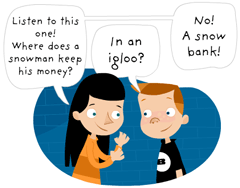
Your second or third grader understands that words do not always mean exactly what they say. Children at this age can understand and tell jokes. They are also beginning to understand puns, understatement, and sarcasm. Understanding double meanings helps children to understand humor and irony when they read or listen to stories as well as to use these devices in their own storytelling.
Readers and writers listen for extended periods of time and comprehend new facts and information. Whether they listen to a soccer coach explain a strategy, to a science teacher explain an experiment about buoyancy, or to a parent reading aloud from a book about whales, second- and third-graders pay attention to and retain details. With guidance from teachers and parents, they try to connect the new information they learn to what they already know about a topic. Having prior knowledge about a wide variety of topics is important. The more your child already knows about a topic, the more new information about the same topic she is able to learn.
Second and third graders build their vocabularies through listening. Not only do children at this age know many, many words, but they also know a lot about the words they know. By the end of third grade, children become skilled at understanding the fine distinctions among closely related words. They might understand the difference among different words for "walk" -- for example, "trudge," "hustle," and "scamper."
Despite his growing reading skills, your second- or third-grader still benefits from listening to stories read aloud. When children become more fluent readers and writers, many parents wonder if it is still OK to read to them. After all, the second or third grader can read by himself. Reading to your second or third grader is still a good practice. By reading challenging books aloud to your child, you can help him learn new vocabulary words and concepts. Better yet, reading a book to your child is a way of exploring a new world or a new experience together.
Being able to listen and contribute in classroom discussions helps your child learn. Most second and third graders can enter conversations that are already in progress and can sustain a conversation of eight or more lengthy exchanges by listening and building on what the other person said. Being a good listener is important for participating in small groups in which children are expected to collaborate with one another and understand each other's perspectives.
Encouraging Your Second & Third Grader
- Read your child books above her reading level to increase vocabulary and general information. Like younger children, second and third graders can still understand books at a higher level than they can read. When you read aloud and discuss the books together, children at this age and stage learn new vocabulary words and information about the world. The more background information, or prior knowledge, and vocabulary a child brings to a particular book she reads, the more fully she will understand the information and ideas presented in the book.
- Read aloud books from a variety of genres to broaden your child's vocabulary and world knowledge. Make sure to vary your reading to include fantasy, biography, informational text, poetry, and even books of jokes and riddles. By reading a variety of books, you expose your child to different kinds of writing and help him to understand different kinds of books he reads at school and at home. He may even use new genres in his own writing.
- Let your child's interests guide your read-aloud choices to develop his in-depth knowledge of a topic. Whether your child is interested in horses, airplanes, or volcanoes, try reading aloud some informational books about his passion. Then read aloud some realistic fiction involving his interest. Also offer some theme-related poetry and biographies.