



- Home
- Baby [an error occurred while processing this directive]
- Toddler [an error occurred while processing this directive]
- Preschooler [an error occurred while processing this directive]
- Kindergartner [an error occurred while processing this directive]
- First Grader [an error occurred while processing this directive]
- Second & Third Grader [an error occurred while processing this directive]
- Articles
[an error occurred while processing this directive]
- Nursery Rhymes
- Sharing Poetry
- Author Focus: Jan Brett and Jane Yolen
- What Is Phonics, Anyway?
- What Not to Say to Emerging Readers
- Children's Choice
- Table Talk
- Tips for Summer Reading
- "Clicking" with Children: Computers and Young Children
- Book Clubs
- Car Talk
- Growing Up with a Learning Disability: A Child's Story
- Raising a Child with a Learning Disability: A Mother's Story
- Ways to Introduce Your Kids to Foreign Languages
- Learning Two Languages: Questions Parents Ask
- Reading to Two: A Double Challenge
- Qualities of a Good Classroom
- How to Create a Literate Home
- A Primer on Dyslexia
- Quick Tips [an error occurred while processing this directive]
- Sitemap
- About This Site
Home » Kindergartner »
Listening Milestones


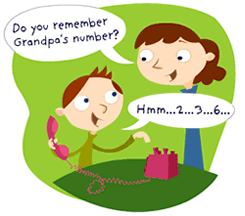
Kindergartners are developing their memory for things they hear. Given the opportunity to practice, kindergartners can remember lists of items, such as grocery lists and phone numbers. They can remember directions with several steps in them, such as, "Get into your pajamas, pick a story, and sit on the couch." If your child is able to remember things, including events in a story, her overall understanding of the story will be better.
Kindergartners frequently ask questions about words and concepts they do not understand. This is called "active listening." When they do not understand a story, they may ask questions that clarify the meaning. They may also begin to relate events or characters in books to their own experiences. Being an active listener is the first step to becoming an active reader. The active listening skills your child develops now will help him to understand stories better as he becomes a reader.
Kindergartners understand complicated sentences. Most kindergartners understand nearly all the grammatical constructions of their native language. They are able to understand when peers or adults talk about the past, present, and future. In addition, they understand when a peer or adult talks about what "might" or "could" happen. Your kindergartner's growing ability to understand complex language helps her to understand stories.
Kindergartners can listen to lengthy stories. One of the major developments during the fifth year is the ability to focus on a task for 15 to 20 minutes at a time. Equipped with improved ability to attend and a natural love of stories, kindergartners can listen actively to more and more complex stories and discuss the story with an adult during and after reading. When your child listens to stories read aloud, he develops vocabulary and knowledge about the world that will help him as he learns to read.
Encouraging Your Kindergartner
- Use complex sentences with your kindergartner. Parents tend to use simple speech when talking with younger children, but you can use longer, more complex sentences when you talk with a kindergartner. By using complex language, you expose your child to complicated grammar and vocabulary, helping your child to understand stories he hears and later on reads himself.
- Talk about the past, present, future, and “what if?”. Your words will demonstrate for your child the grammar necessary for talking about these different times. These thinking skills help children understand stories and information read aloud to them and will eventually help them to understand when they read independently.
- Introduce new vocabulary words in daily conversation. A walk around the block can be an opportunity to discuss the difference between "hustle" and "dawdle." Use words with more than one meaning, such as "bear," and explain that some words have many different meanings. By using new words and talking about words, you broaden your child's vocabulary and help her to understand stories and information she hears read aloud.
- Continue to read aloud regularly with your kindergartner. This is an age where children are able to listen to longer, more complicated stories and chapter books. Encourage your child to choose books that interest her, as that will help ensure her attention. Read a variety of genres, and make sure you continue to discuss the books you read together. Reading to children daily increases their vocabulary, knowledge of the world, and understanding of story structure. Reading aloud also strengthens your kindergartner's knowledge of what the written word is and how it works. This understanding is essential for learning to read.