



- Home
- Baby [an error occurred while processing this directive]
- Toddler [an error occurred while processing this directive]
- Preschooler [an error occurred while processing this directive]
- Kindergartner [an error occurred while processing this directive]
- First Grader [an error occurred while processing this directive]
- Second & Third Grader [an error occurred while processing this directive]
- Articles
[an error occurred while processing this directive]
- Nursery Rhymes
- Sharing Poetry
- Author Focus: Jan Brett and Jane Yolen
- What Is Phonics, Anyway?
- What Not to Say to Emerging Readers
- Children's Choice
- Table Talk
- Tips for Summer Reading
- "Clicking" with Children: Computers and Young Children
- Book Clubs
- Car Talk
- Growing Up with a Learning Disability: A Child's Story
- Raising a Child with a Learning Disability: A Mother's Story
- Ways to Introduce Your Kids to Foreign Languages
- Learning Two Languages: Questions Parents Ask
- Reading to Two: A Double Challenge
- Qualities of a Good Classroom
- How to Create a Literate Home
- A Primer on Dyslexia
- Quick Tips [an error occurred while processing this directive]
- Sitemap
- About This Site
Home » Kindergartner »
Reading Milestones


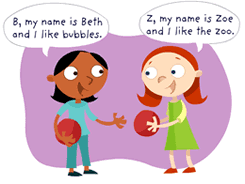
By the end of kindergarten, most children can recognize and write upper and lower case letters. They also learn the sounds associated with most of the letters of the alphabet. Most kindergartners can tell you that B says "b" and M says "m" and can incorporate letters and sounds into games they play like "The Name Game" and "I Spy." Children typically master consonant sounds before vowel sounds because it is harder to hear the small differences among some vowel sounds.
Most kindergartners can read some words and simple books. Children in kindergarten recognize some words by sight or by looking at them and recognizing them as wholes. Kindergartners' "sight words" often include their own names, the names of classmates, and words they use frequently in their writing, such as "Mom," "love, " and "the." They also learn words they see around them, such as "STOP" and "EXIT." Many can read "families" of words such as "cat," "bat," and "mat." By the end of the year, many kindergartners are able to "read" familiar books by recognizing a few words, remembering what the story says, and looking at the picture.
Kindergartners learn that writing goes from left to right. They learn that we read to the end of a line and return to the left to read another line. They learn where a printed word begins and ends and learn the difference between a word and a letter. Many can match spoken words to the words in books. They even begin to recognize and learn the purpose of common punctuation marks such as periods and question marks. Having a solid understanding of what print is and the way it works is necessary for learning to read.
Kindergartners can understand more than just the plot of a story. They are able to extend their thinking and discuss why events happened and why characters acted as they did. They can also make reasonable predictions about what will happen next and relate the story events to events in their own lives. Being able to discuss stories they listen to now will help children make meaning later on when they are able to read independently.
Encouraging Your Kindergartner
- Let your child read the words and offer help only when it's needed. By the end of kindergarten, many children can read simple books containing short, common words and books that follow a predictable pattern. Most children rely heavily on pictures and their memory of the story to help them read. Young readers benefit from practice, and they take great pride in showing off their new skills to adults. As your child reads to you, you can help out and provide words if he gets stuck, but try not to step in before you are needed.
- Let your child "share" the reading with you. Not all children can read books independently at the end of kindergarten, but all can share reading with an adult. The child who recognizes only a few words can chime in and read those words in the text. Most can fill in a rhyming word in a shared reading. For example, if you read, "Have you ever seen a bear combing his _______?" your child will probably provide "hair" as the correct rhyme.
- Keep reading sessions short. Reading can be hard work for kindergartners. It is a complex activity that requires a delicate orchestration of skills, including paying attention, looking carefully at print, remembering sounds of letters, and using language prediction skills. Kindergartners expend a lot of energy reading, so if your child shows signs of frustration, it is definitely time to stop.
- Encourage your child to track the print with a finger, pointing to each word as she says it. This habit will reinforce the idea that printed words represent spoken words and that print goes from left to right in English. You can also ask your child to find words she knows in the text or to find a word that starts with a certain beginning sound. Asking your child how she knew the word was "kitten" and not "cat," for example, will help improve her awareness of the strategies she is beginning to use in reading.
- Don't limit reading to books. Reading is a skill that we use regularly in our everyday lives, so encourage your child to read at times other than at book time. Having your kindergartner read street signs, look over your shopping list, follow a simple recipe with you, and read a menu with you are all ways that you can extend reading beyond books.