



- Home
- Assistive Technology [an error occurred while processing this directive]
- Augmentative Communication [an error occurred while processing this directive]
- Autism
[an error occurred while processing this directive]
- Characteristics of Autism
- Identifying Children with Autism
- Approaches to Autism
- Educational Needs
- Bringing Learning into the Home
- The Developmental Model in Action
- Why a Developmental Model?
- Team Planning and Cooperation
- Benefits of Using a Developmental Approach in an Inclusive Early Childhood Center
- What Families and Professionals Are Saying
- More on Supporting Kids with Autism in Inclusive Environments
- Additional Resources
- Challenging Behavior [an error occurred while processing this directive]
- Family Rights [an error occurred while processing this directive]
- Fostering Friendships [an error occurred while processing this directive]
- Growing Up Happy and Independent
- Inclusive Education [an error occurred while processing this directive]
- Journey Toward Independence [an error occurred while processing this directive]
- Learning Disabilities [an error occurred while processing this directive]
- Let's Practice Yoga [an error occurred while processing this directive]
- Respecting Differences [an error occurred while processing this directive]
- Special Education Evaluation [an error occurred while processing this directive]
- Resources
- About This Site
Home »
Let's Play Together: Fostering Friendships Between Children with and Without Disabilities


Montclair State University
Pace University
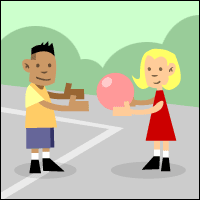 Parents know that having friends is one of the most rewarding aspects of a child's life. Parents of children with disabilities want their children to be loved, feel a sense of belonging, and share similar experiences with their siblings and other children.
Research supports what parents have always known - that friendships are beneficial to children. Friendships boost a child's social competence, self-esteem, and confidence. Friendships support social, emotional, and intellectual development. Having a good friend means sharing fun times and difficult times. A good friend can offer comfort and connection through words, gestures, or silence. A group of friends can provide a wonderful and important opportunity for a child to fit in and to be accepted.
Children with disabilities may need extra support from adults to play and make friends. Sometimes children with disabilities are at risk of having social interactions only with adults who are paid to be with them (such as teachers, therapists, and doctors). All children need to play and interact with other children. Parents, caregivers and teachers can play a key role in teaching young children how to make friends with children with and without disabilities. Although some friendships develop naturally, it is important to teach children specific social skills and provide many different kinds of opportunities for friendships to develop.