



- Home
- Assistive Technology [an error occurred while processing this directive]
- Augmentative Communication [an error occurred while processing this directive]
- Autism
[an error occurred while processing this directive]
- Characteristics of Autism
- Identifying Children with Autism
- Approaches to Autism
- Educational Needs
- Bringing Learning into the Home
- The Developmental Model in Action
- Why a Developmental Model?
- Team Planning and Cooperation
- Benefits of Using a Developmental Approach in an Inclusive Early Childhood Center
- What Families and Professionals Are Saying
- More on Supporting Kids with Autism in Inclusive Environments
- Additional Resources
- Challenging Behavior [an error occurred while processing this directive]
- Family Rights [an error occurred while processing this directive]
- Fostering Friendships [an error occurred while processing this directive]
- Growing Up Happy and Independent
- Inclusive Education [an error occurred while processing this directive]
- Journey Toward Independence [an error occurred while processing this directive]
- Learning Disabilities [an error occurred while processing this directive]
- Let's Practice Yoga [an error occurred while processing this directive]
- Respecting Differences [an error occurred while processing this directive]
- Special Education Evaluation [an error occurred while processing this directive]
- Resources
- About This Site
Home » Augmentative Communication »
How to Use AAC Successfully


-
Ask for training.
Family members, caregivers, and school staff should be trained on how best to support your child’s use of AAC. Training should be done by a person who is knowledgeable in AAC. Effective training will:
- show you how to use AAC with your child
- help you choose appropriate vocabulary fo your child
- teach you to program and operate your child's communication device
-
Model the use of AAC.
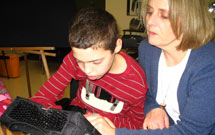
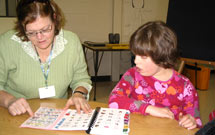
If your child is expected to use AAC to communicate, then it is important that you and other adults model using the AAC system.
-
Take time to listen and communicate.
Communicating with a child using AAC may be a slow process. It may take time for your child to formulate and express his ideas. It is very important for you wait patiently for your child to think about what he has to say and to communicate his ideas to you.
-
Encourage your child to use multiple ways of communicating.
A child will naturally want to use the quickest way to communicate. For example, a child would rather shake his head yes or no then go to his communication board to say "yes" or "no". Frustration can set in if adults tell children to use their device when gestures or other simple strategies can be used. Encourage your child to use multi-modal communication.
-
Teach your child to initiate conversations.

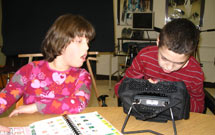
Often times children who use AAC respond to adult questions but do not begin conversations with other children or adults. You can help your child by teaching her to use language effectively such as saying "hello" or "goodbye," requesting attention or objects, or communicating “more”, “no” or “finished.”