



- Home
- Assistive Technology [an error occurred while processing this directive]
- Augmentative Communication [an error occurred while processing this directive]
- Autism
[an error occurred while processing this directive]
- Characteristics of Autism
- Identifying Children with Autism
- Approaches to Autism
- Educational Needs
- Bringing Learning into the Home
- The Developmental Model in Action
- Why a Developmental Model?
- Team Planning and Cooperation
- Benefits of Using a Developmental Approach in an Inclusive Early Childhood Center
- What Families and Professionals Are Saying
- More on Supporting Kids with Autism in Inclusive Environments
- Additional Resources
- Challenging Behavior [an error occurred while processing this directive]
- Family Rights [an error occurred while processing this directive]
- Fostering Friendships [an error occurred while processing this directive]
- Growing Up Happy and Independent
- Inclusive Education [an error occurred while processing this directive]
- Journey Toward Independence [an error occurred while processing this directive]
- Learning Disabilities [an error occurred while processing this directive]
- Let's Practice Yoga [an error occurred while processing this directive]
- Respecting Differences [an error occurred while processing this directive]
- Special Education Evaluation [an error occurred while processing this directive]
- Resources
- About This Site
Home » Assistive Technology »
Types of Assistive Technology


The following are some examples of different types of assistive technology:
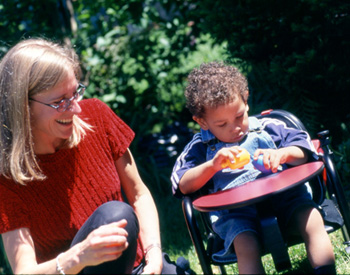
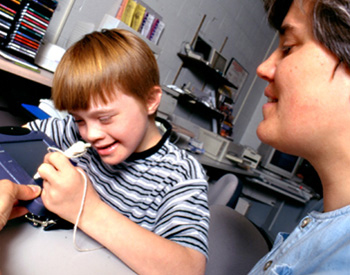
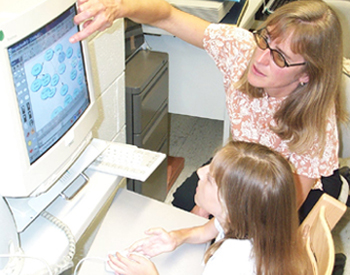
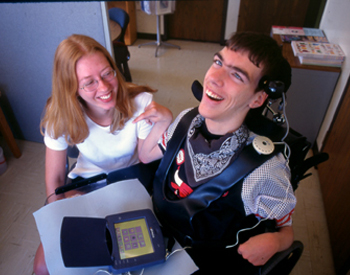
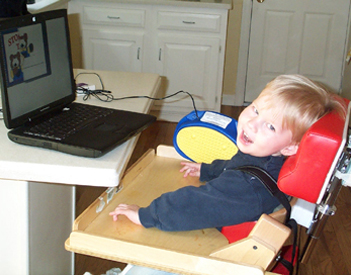
- Access and Environmental Controls: Devices that allow increased control of the environment or that open up access to things in the environment. This includes electronic controls like switches, special keyboards or mice, and remote controls as well as things that help people get around the community, like ramps, automatic door openers, and Braille signs.
- Aids to Daily Living: Special tools for daily activities, like brushing teeth, dressing or eating. This includes adapted utensils, plates and cups, non-skid surfaces, and specially designed toilet seats and shower stalls.
- Assistive Listening: Supports that help a student who is either deaf or has a hearing loss. This includes hearing aids, amplifiers, captions on TV, and typing telephones.
- Augmentative/Alternative Communication: Supports that allow a child who cannot speak, or whose speech is not understood by others, to communicate. This includes picture boards, voice output communication devices, communication software and computers.
- Computer-Based Instruction: Software to help students with learning difficulties in reading, writing, math and other subject areas.
- Mobility: Equipment that allows a student with a physical or visual disability to move independently and safely through the community. This includes wheelchairs, walkers, and adapted bicycles.
- Positioning: Any support that helps a student with a physical disability remain in a good position for learning without becoming tired. This includes adjustable chairs, tables, standers, wedges and straps.
- Visual Aids: Supports that give a student with visual difficulties access to information. This includes large-print books, books on tape, magnifiers, talking computer software, and Braillers.