



Home » Talking with Kids »
Age & Stage Tips


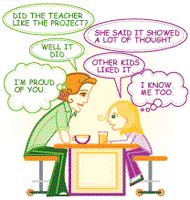
"The quality of the exchange does not depend on the number of words used. Short positive exchanges can make a child feel great. You don’t always have to delve deeper. Let your child bring up more if she wants, and if she needs to, she will."
Michael Thompson, Ph.D.
Author, The Pressured Child
Preschool, Kindergarten & First Grade
Younger children often bubble up with their own comments about the school day but skip lots of information parents find important. Some don’t like the question "how was school?" primarily because they think their parents know what’s in their head. Developmentally, younger children haven’t completely realized that their lives are separate from their parents.
To encourage communication, you might ask "what did you build in the block center?" or "what songs did you sing in music today?" Comment on their work, with statements like “you’re studying words with the letter B. Grandma’s name Barbara starts with B. What other words start with B?”
Keep in mind, however, that while some young children are chatterboxes, others are not. "For many young children, talking is not their main way of communicating. So don’t be upset if you don’t get an elaborate answer," comments Lawrence Cohen, Ph.D. "Instead, get out the stuffed animals, dolls, or action figures and observe what your child does through play. Your child might play the part of a scolding teacher, or want you to play the part of a naughty child. Or, your child might give you an art class. You never know."
Second & Third Grade
Kids this age may start sharing less. They know the school routine and may not want to discuss it with you. How they feel about their friends begins to overshadow school work, but they may not want to talk about social problems with parents or be able to verbalize them succinctly. If your child seems upset when she comes home, instead of prying with questions, you might say later "I notice you were grumpy when you walked in the door. Did something happen?" Compliments can start great conversations as well. You might say, "You’re really working hard on your handwriting. This story looks great."
Fourth & Fifth Grade
Older kids sometimes interpret your questions as demands. They may think you want a report on how well they are doing, or an update on their social lives which they would rather keep private. They may sometimes be afraid that you will interfere or try to fix situations they would rather deal with themselves. Your older child might think, "There’s way too much to tell you. And you’re just going to over-react, so I’m not going to bother."
Kids this age may talk more readily about their friends than about themselves. You might ask "what do your friends think about the new math teacher?" and learn a lot about what your child thinks. Try to avoid orders like "time for homework!" and instead ask "what’s your homework plan for the day? Should we make one together?"