



Home »
The Secrets of Your Child's Social Life


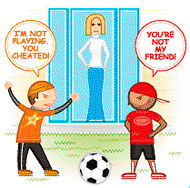
"It's a challenge to learn to play with other kids especially when they have ideas of their own—but this is an important skill. Kids need to learn to negotiate and work out conflicts by themselves, but they may need a helping hand or a sympathetic ear along the way."
Lawrence Cohen, Ph.D.
Author, Playful Parenting
Ask any kid, and you'll likely hear that time spent with friends is the most important part of the school day. Educators, as well, acknowledge that making friends is one of the most valuable things children do as they learn and grow. But many parents are perplexed by their children's social lives, wondering how to help their kids cope with the challenges, heartbreaks, and the joys of making friends, losing them, and making friends again.
"Friendships help children gradually learn to be independent, contributing members of a community and it's just as important as their academic growth" notes Diane Levin, Ph.D., author of Remote Control Childhood. "However, it's a slow process. There are many social skills to learn, which advance with age and experience, trial and error, and experiencing the satisfaction that comes from contributing to an ongoing friendship."
"Friendship starts as soon as children can crawl off their parents' laps over to another child," adds Michael Thompson, Ph.D., co-author of Best Friends, Worst Enemies. "From that point on your child will slowly move from valuing her life with you to her life with her friends. But who their friends are, how they interact with them, and how popular they are, is something parents have only limited control over."
That said, problems like jealousies, breakups, bullying and teasing comprise a big portion of what parents, kids and teachers talk about, and what parents worry about.
This guide offers insights into how children's friendships develop and how parents can help, if needed. You'll also find ways to determine if your child is at risk for serious social problems or simply suffering from real (but common) social challenges.