



Home » Starting School »
Before School Starts


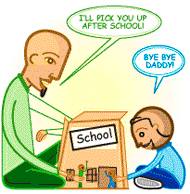
Play a Starting School Game
"Play acting school can help a younger child imagine what it will be like, and help you find out what your child is thinking and feeling. Choose a few props (a toy school bus, or old shoe box with dolls or stuffed animals as the passengers), and a dollhouse to represent school. Observe your child’s play with an open mind. Your child might not be feeling what you expected, so take your cues from the play. Join the play and suggest solutions like 'Let’s talk to the teacher together to tell her you feel nervous,' or 'Would you like an extra hug?'"
Diane Levin, Ph.D.
Professor of Education, Wheelock College. Author, Teaching Young Children in Violent Times.
A little advance preparation can make the first week a lot easier. Tailor these strategies to suit you and your child as you prepare for the big day.
Practice going to school. Make a dry run to help your child get familiar with the route and the routine. Point out interesting sights or places familiar to your child. Notice the swings, slides, or other fun stuff that your think your child will like — and try them out together.
Describe what will happen on the first day. Keep in mind that a child starting school for the first time or going to a new school may have a hard time imagining what it will be like (You’ve been to school before, but they haven’t.) "Talking about the basic sequence of the day will help your child make a mental movie of what to expect. Kids form pictures in their minds, and reviewing the process in detail will make things more familiar and less scary on the first day of school," advises Diane Levin, Ph.D., Professor of Education at Wheelock College.
Ask your child compelling questions. Specific questions will help your child imagine what school will be like and help you talk about the fun stuff and the hard stuff. You might ask,
- "What do you think the hardest part of school is going to be?"
- "Is there anything that worries you about starting school?"
- "What are you really looking forward to?"
Start going to bed earlier. One or two weeks before school begins, start rolling bedtime back to a school schedule. Begin slowly, waking your child up 15 minutes earlier every day and going to bed 15 minutes earlier each night until she is back on track.
Meet kids in the class. If your child is going to a new school, find out if there will be a class gathering before the first day; it can be helpful to see familiar faces when she walks into a new classroom. Even if your child already has friends at school, schedule some play dates with kids your child may not have seen over the summer.
Learn about the drop-off policy. Find out about the policy for parents walking children into the classroom and how long you can stay. If you anticipate that your child will need extra time to adjust, talk to the teacher before school starts, if you can.
Give children control over what they can control. Offering simple choices may help calm nerves and get kids excited. For example, if you pick out a new backpack or lunchbox, let your child choose the color. If you shop for school supplies, let your child find the items in the store and check them off on your list. The day before school starts let your child choose clothes for the first day — but keep veto power!
Plan ahead how you will say goodbye. Think about what your child needs in a goodbye. What will be most helpful — a quick goodbye, or five minutes of cuddle time with you?
Read books about starting school. Whether you’re going to a new school or a new grade, books about it will get kids talking and feeling comfortable. Some good ones include The Berenstain Bears Go to School by Stan and Jan Berenstain, Annabelle Swift, Kindergartner by Amy Schwartz, First Day Jitters by Julie Dannenberg, I Am Absolutely Too Small for School by Lauren Child, and Get Ready for Second Grade, Amber Brown by Paula Danzinger.